
A one-stage, needle-delivered surgical technique study
NanoACi 100
A prospective consecutive case series evaluating the safety, reproducibility and clinical signal of a surgeon-led, point-of-care approach to knee cartilage disease.
100
Consecutive patients
Motion Age
Objective function
24 months
Planned follow-up
The Clinical Imperative
Can cartilage treatment become simpler without losing scientific rigour?
Articular cartilage has limited intrinsic healing capacity. Established autologous chondrocyte implantation pathways can involve arthroscopic harvest, laboratory expansion and a later implantation procedure. NanoACi is designed as a one-stage surgical alternative; NanoACi 100 will evaluate that technique prospectively.
Traditional cultured-cell ACI
- Arthroscopic cartilage harvest
- Cell culture and laboratory expansion
- Later implantation procedure
- Longer, multi-stage treatment pathway
NanoACi
- Small auricular cartilage harvest
- Point-of-care mechanical preparation
- No cell culture or enzyme digestion
- Needle delivery during one surgical session
Research question
Is the NanoACi technique safe, reproducible and associated with meaningful improvement in pain, function and imaging measures?
The Surgical Technique
One session. Three autologous components.
NanoACi is being studied as a tissue-harvesting, preparation and reimplantation procedure — not simply as an injection. Under local anaesthetic, small cartilage and perichondrial samples are harvested from the auricular concha. The tissue is mechanically prepared at the point of care into micrografts, combined with an in-situ-forming collagen scaffold and platelet-rich fibrin (PRF), then implanted by ultrasound-guided needle delivery.
Protocol principle: autologous, mechanically prepared, non-arthroscopic and completed without laboratory cell expansion.
Harvest
Auricular cartilage and perichondrium
Prepare
Point-of-care mechanical micrografts
Combine
Collagen scaffold and autologous PRF
Implant
Ultrasound-guided needle delivery
Study Design
A prospective record of the first 100 consecutive cases.
The planned study is a single-surgeon, prospective consecutive case series. Its purpose is to characterise delivery of the technique, establish an early safety profile and measure clinical and functional change over time.
100
Planned participants
1
Standardised technique
6
Assessment points
24m
Planned observation
Population
Adults with symptomatic knee cartilage disease or osteoarthritis selected through whole-joint clinical assessment.
Primary evaluation
Change in Motion Age from baseline to 12 months, alongside systematic procedural and safety reporting.
Secondary evaluation
VAS pain, OKS, patient experience, individual movement biomarkers, MRI findings and further intervention.
Outcome Framework
Measuring what changes — and what matters.
The evaluation combines patient-reported experience, objective movement analysis, safety surveillance and structural imaging. Results will be reported only after the relevant dataset is complete.
Motion Age
Markerless movement analysis will quantify functional change, including sit-to-stand, squat and related movement biomarkers.
Pain & patient experience
VAS pain, Oxford Knee Score (OKS), global improvement and satisfaction will describe the patient-reported response.
Safety
Complications, inflammatory reaction, infection, donor-site events, unplanned admission and further intervention will be recorded.
MRI
Planned imaging review will assess cartilage thickness and repair morphology at defined follow-up points.
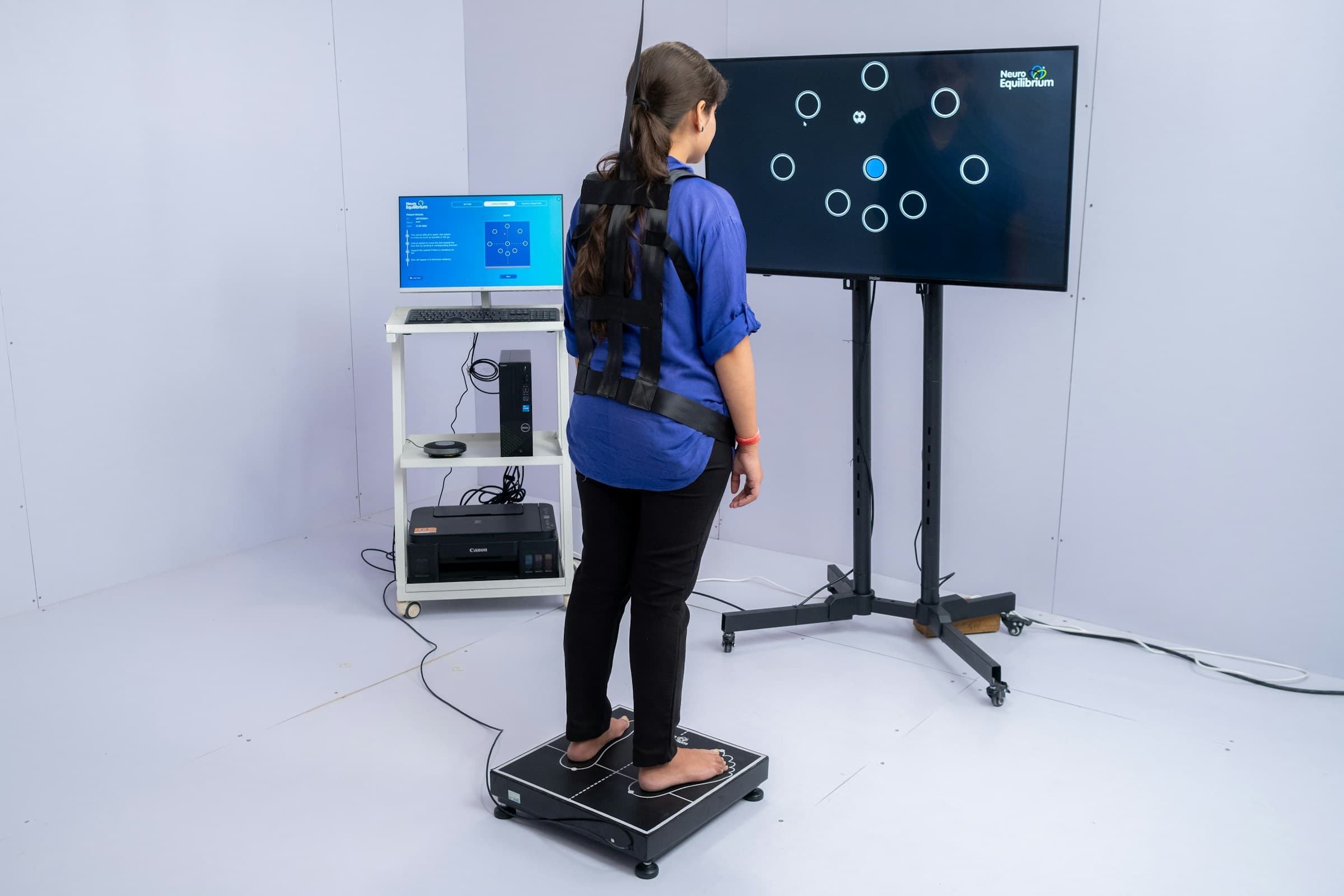
Functional Biomarker · Motion Age
Motion Age turns movement into an understandable functional measure.
Beyond questionnaires: markerless video analysis examines how a person moves and compares that pattern with age-related movement benchmarks.
For NanoACi 100, Motion Age will provide an objective complement to pain scores and patient-reported outcomes, helping the study detect whether movement quality changes after the procedure.
Planned Follow-Up
From baseline to two years.
- 0
Baseline
Clinical, patient-reported, Motion Age and imaging assessment
- 6w
Early review
Recovery, safety and rehabilitation progress
- 3m
Initial response
Pain, function and adverse events
- 6m
Functional review
Patient outcomes and Motion Age
- 12m
Primary analysis
Full outcome set, Motion Age and MRI
- 24m
Durability
Longer-term clinical and imaging follow-up
NanoACi 100
Prospective evaluation of a needle-delivered, one-stage autologous chondrogenic surgical technique for knee cartilage disease.
Background
Cartilage has limited healing capacity, while established autologous chondrocyte implantation can require tissue harvest, cell culture and a later implantation procedure. NanoACi is a minimally invasive, surgeon-led technique combining auricular cartilage micrografts, a collagen scaffold and platelet-rich fibrin during one treatment session.
Methods
This prospective, single-surgeon consecutive case series will include 100 adults with symptomatic knee cartilage disease or osteoarthritis. Following whole-joint assessment, auricular cartilage and perichondrium will be mechanically prepared at the point of care, combined with collagen scaffold and PRF, and implanted under ultrasound guidance. Assessments are planned at baseline, 6 weeks, 3, 6, 12 and 24 months.
Planned analysis
The study will characterise procedural safety and reproducibility and examine change in Motion Age, VAS pain, OKS, patient experience, movement biomarkers and MRI features. Further treatment and progression to knee arthroplasty will also be recorded. No outcome estimates will be presented before the dataset is complete.
Conclusion
NanoACi 100 is intended to provide an early, transparent evaluation of this surgical technique, inform patient selection and technique refinement, and support the design of future controlled studies. As an uncontrolled case series, it will not establish comparative efficacy.
The Road Ahead
Evidence built in deliberate stages.
Now
Technique evaluation
Prospective consecutive case series focused on delivery, safety and early clinical signal.
Next
External validation
Replicate findings across surgeons, settings and clearly defined patient groups.
Then
Comparative assessment
Evaluate NanoACi against appropriate established treatments in a controlled design.
Final study registration, eligibility criteria and analysis plan will follow completion of research governance and protocol approvals.